“The person who wants to volunteer has to figure our where do my strengths lie? And with those strengths, you can really put magic into the hearts of others, but you have to feel very dedicated.”
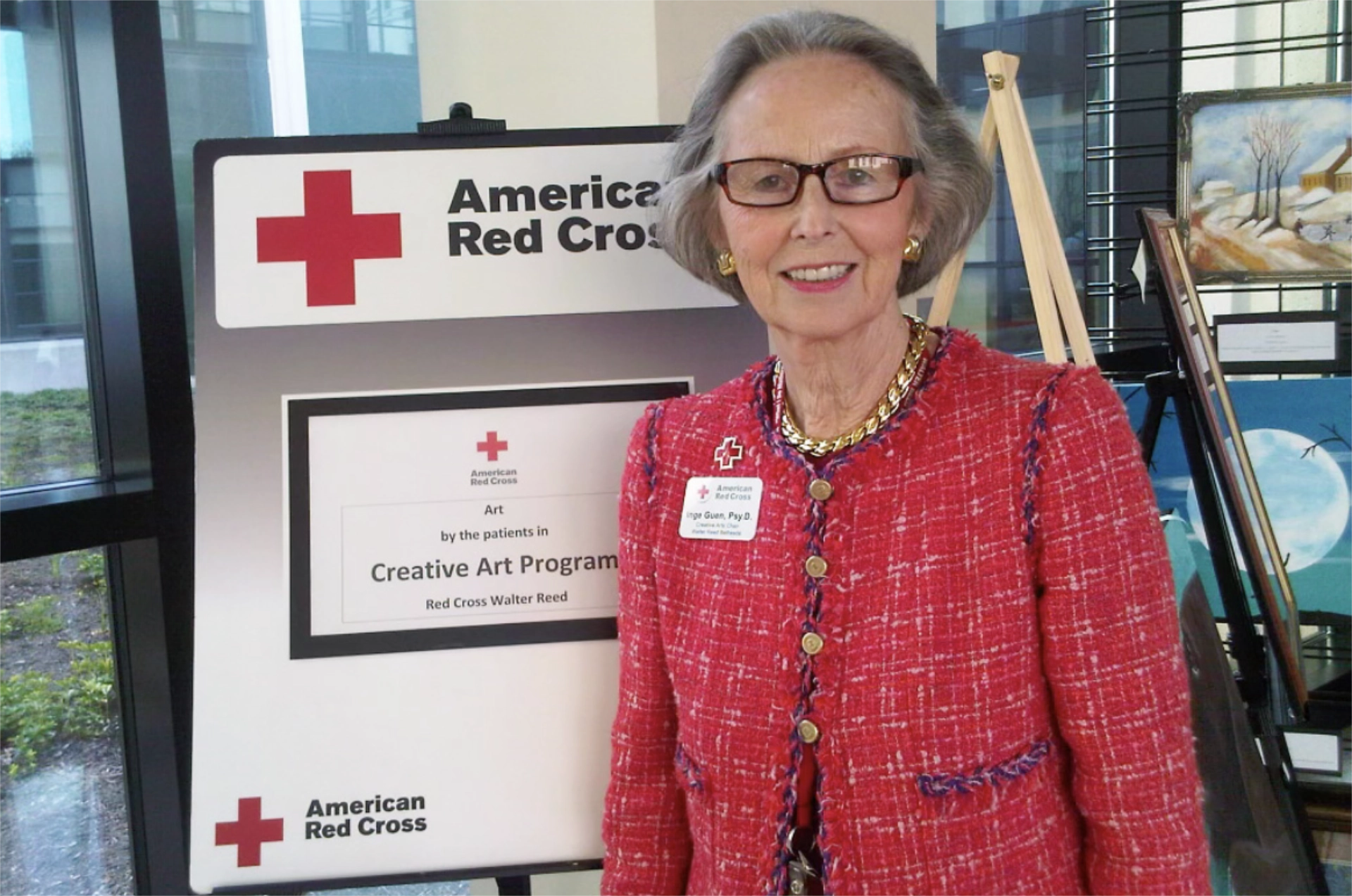
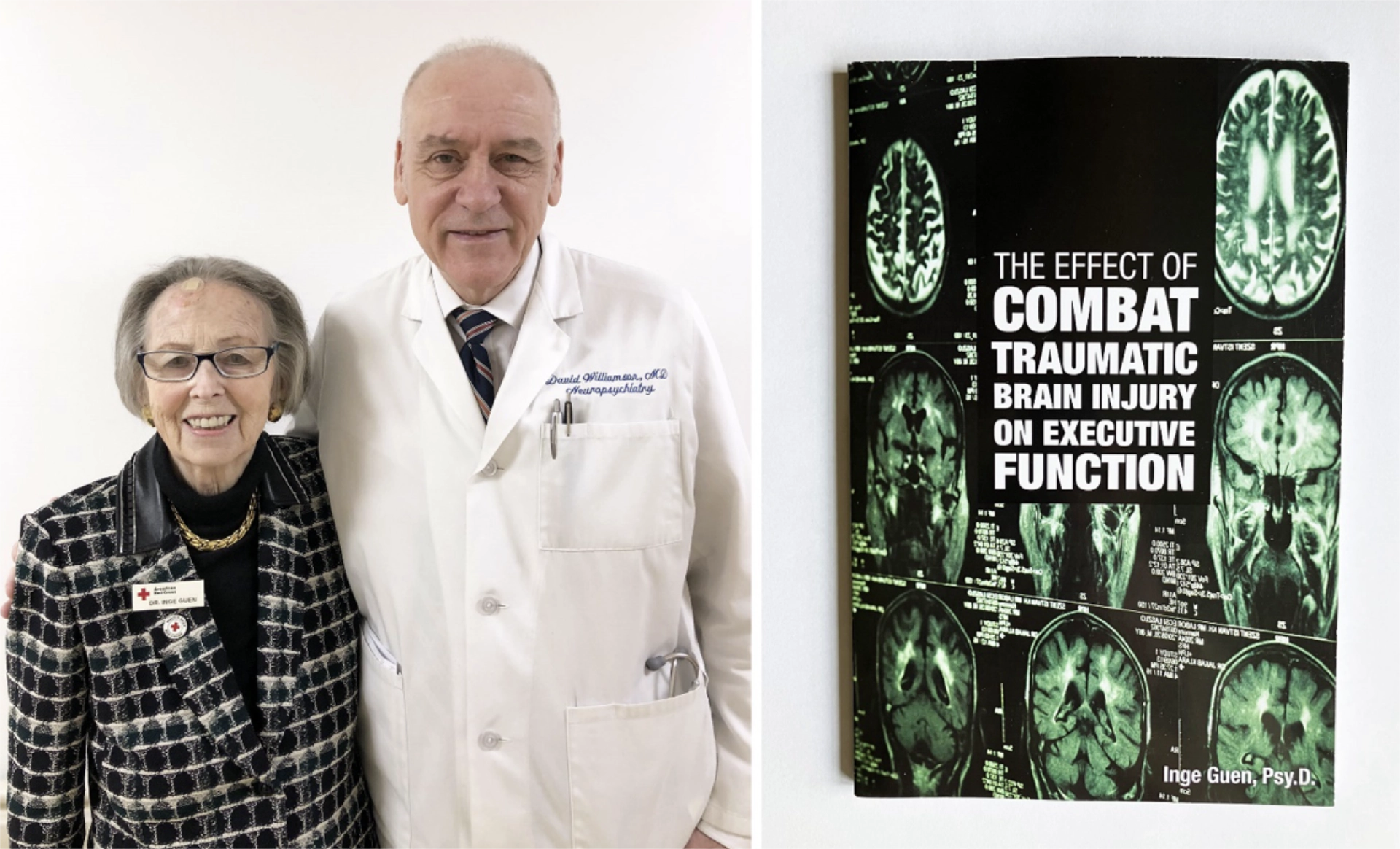
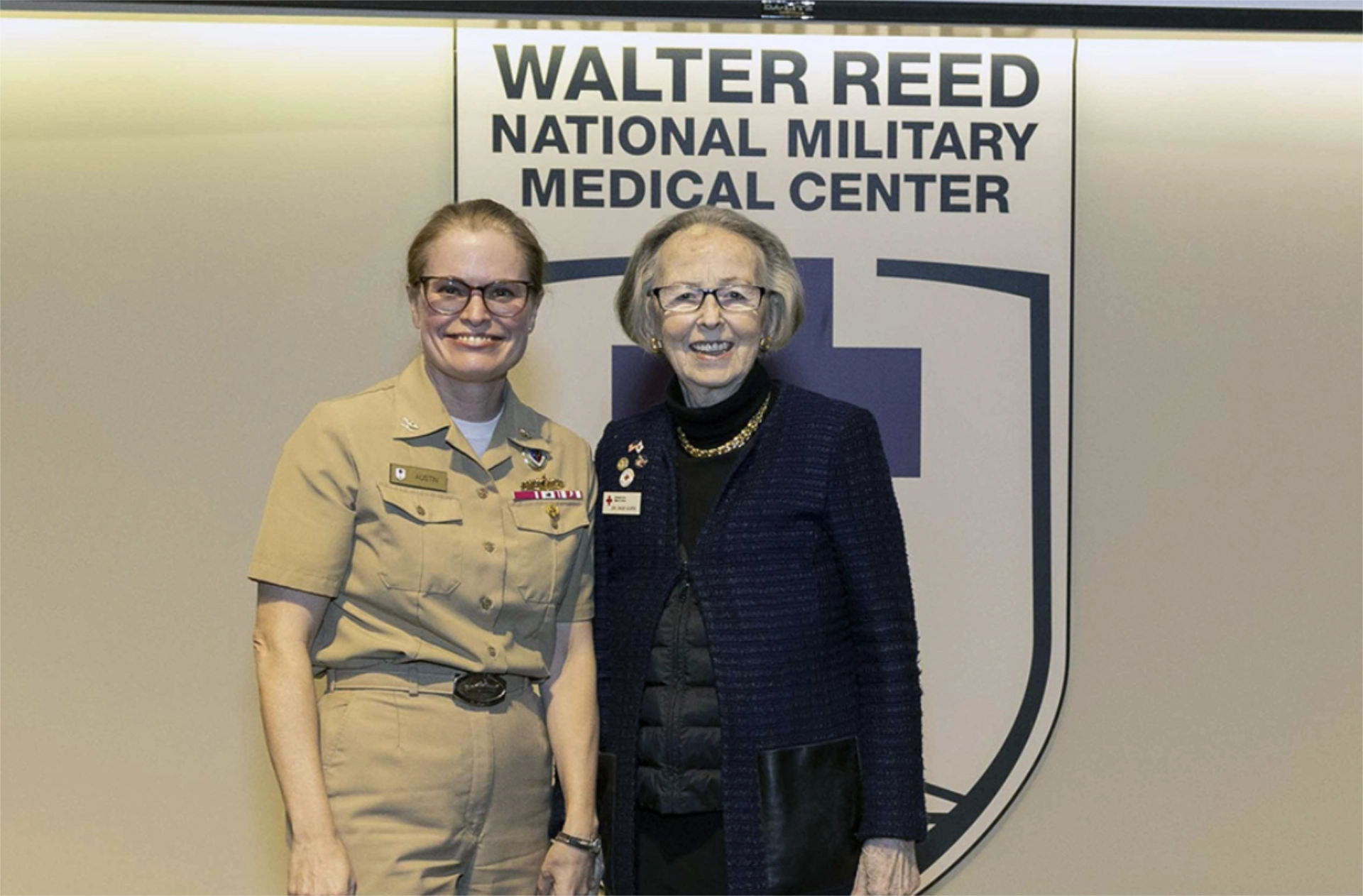
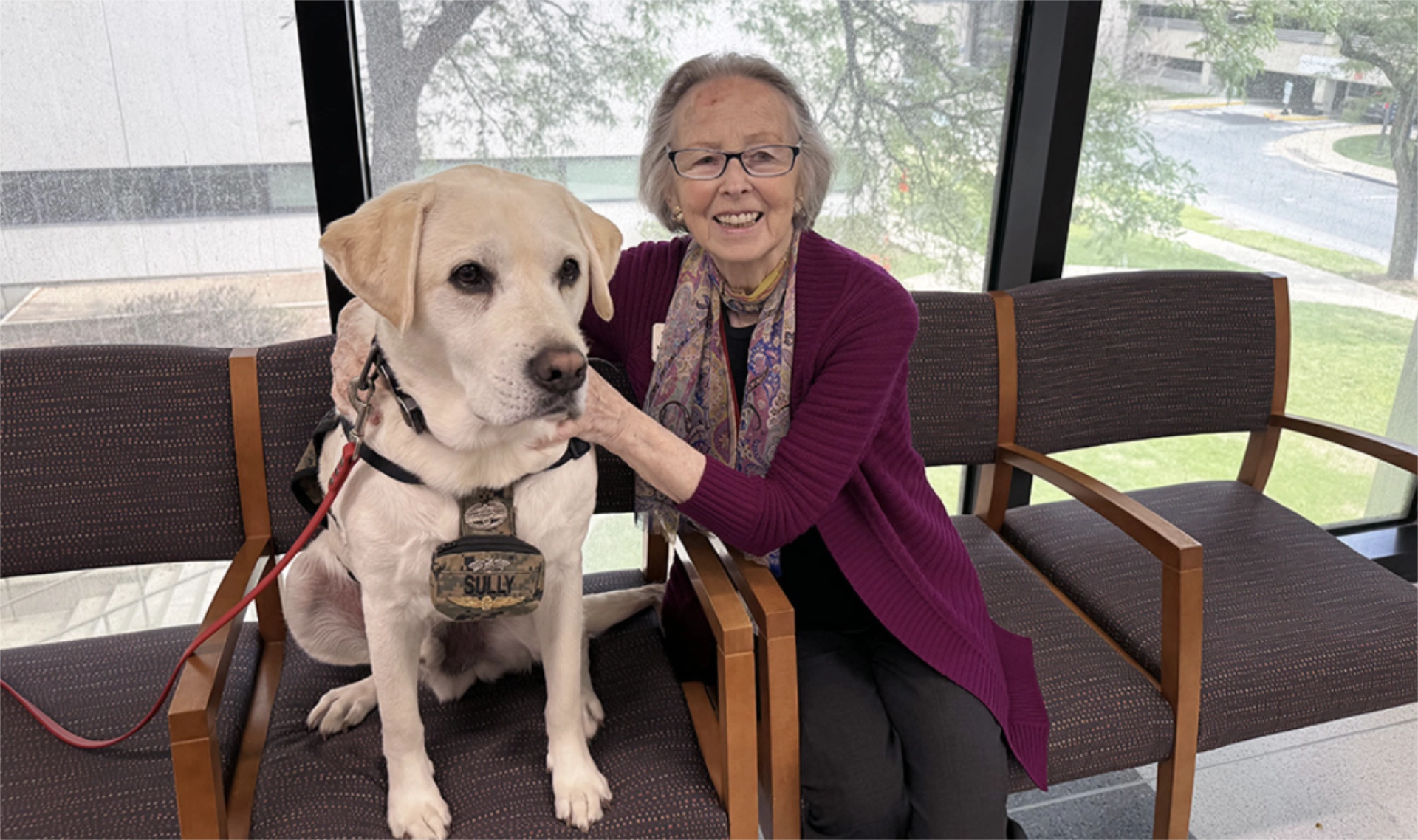
Dr. Inge Guen’s lifelong commitment to service began in 2008 when she met a U.S. Army sergeant who was severely wounded during Operation Iraqi Freedom. Inspired by his resilience, she dedicated herself to supporting active-duty military personnel, volunteering for nearly two decades in the Behavioral Health and Traumatic Brain Injury units at Walter Reed National Military Medical Center (WRNMMC). Already holding a master’s degree in Child and Adolescent Psychology, she pursued further education and earned her Doctor of Psychology degree, completing a clinical externship at the National Naval Medical Center under the Chief of Psychiatry.
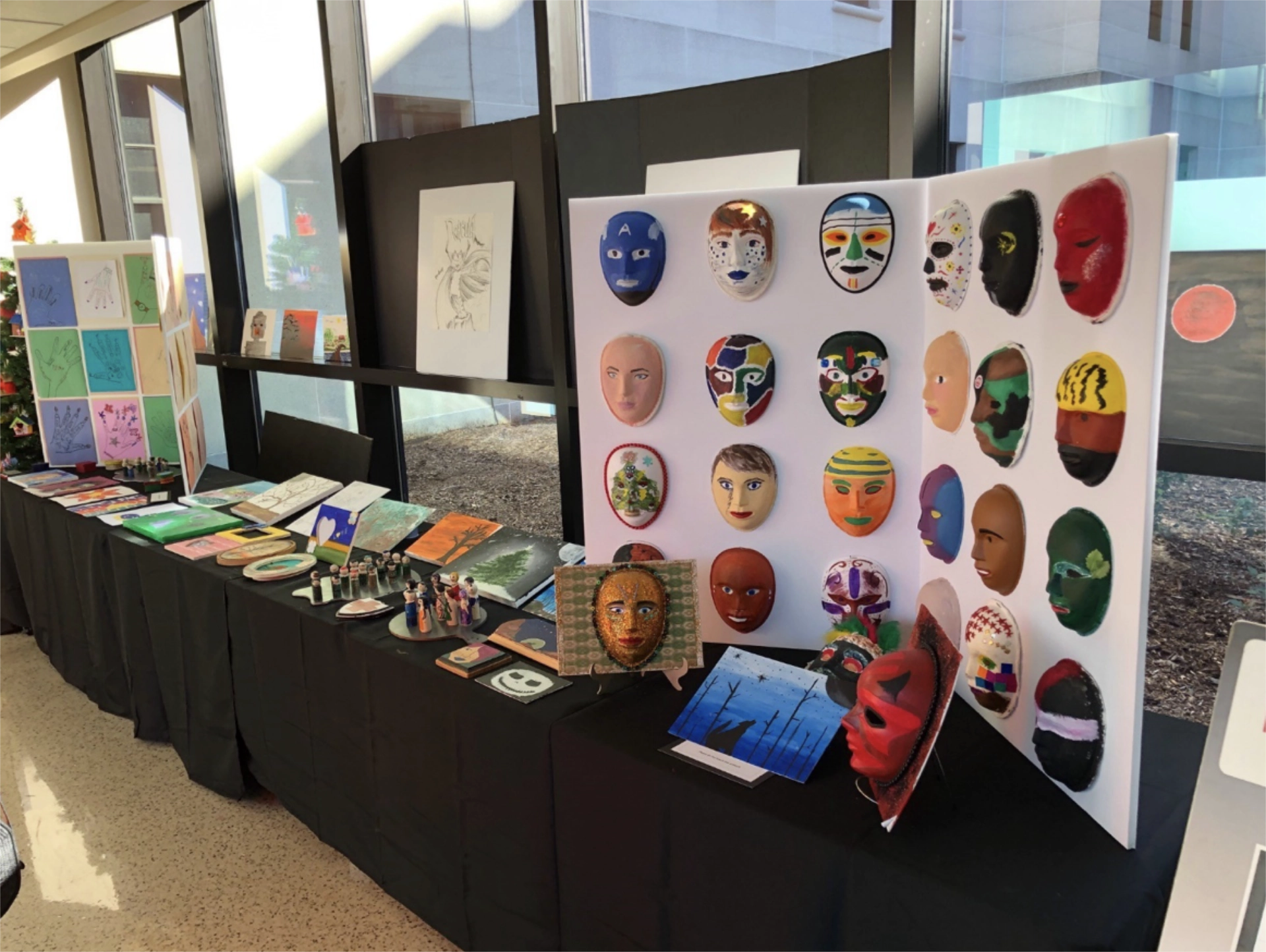
Her clinical training evolved into a lasting role with the Red Cross Service to the Armed Forces at WRNMMC. In 2012, she was appointed Medical Chair of the Creative Art Program for the Behavioral Health and Traumatic Brain Injury wards, which she has led for over thirteen years. Through this initiative, Dr. Guen and her team provide therapeutic art experiences that foster communication, healing, and respite from medical routines for wounded warriors.
In addition to her clinical work, Dr. Guen has been a tireless advocate for wounded warriors and the Red Cross Service to the Armed Forces. She has given many talks to a variety of groups around the country about the lives of the wounded warriors and the challenges they face, both physical and mental. As part of this she was a special guest on a nationwide PBS telethon hosted by Alan Alda and Joe Mantegna, which raised millions of dollars to help wounded warriors from the Afghanistan and Iraq wars.
Her extraordinary service has been recognized with numerous honors, including the President’s Lifetime Achievement Award from President Biden, the Ellen Hardin Walworth Medal for Patriotism from the Daughters of the American Revolution, the Pin of Honor of the Order of St. John, and a traditional military “coin” presented by Lieutenant General Patricia Horoho, U.S. Army Surgeon General, for her clinical care contributions.
Please describe the moments that led to your decision to work with veterans.
The very first moment was in 2008. My son, who is now in heaven, was an attorney at the World Bank and the International Monetary Fund. He was a knight of the Order of Saint John, and he was very dedicated to helping wounded warriors at that time because we had a war going on in Iraq and Afghanistan. He said, “Mommy, let me bring you to Walter Reed as I want to introduce you to a special soldier”.
I went into a room and saw a beautiful young man lying on his bed. He didn’t have any legs and was missing one hip and one arm. He smiled at me and said, “Hello.” I said, “My God, you are such a beautiful young man”. He was just 19 years old. He did not complain. He did not say, “I shouldn’t have gone there”. He was the gunner in a Humvee that was blown up by an IED and saw one of his legs and an arm suddenly come down. He was in a military hospital in Germany for a long time in an intensive care unit, and when I met him some months later at Walter Reed something filled my heart with so much joy, so much gratitude, that my son had introduced me to someone who needed my love, who needed my help, and from that moment on, I dedicated myself to our wounded warriors.
I felt so fortunate. He did not complain and none of these wounded soldiers did. They all carried their wounds as a badge of honor.
What was your work like before you visited that warrior?
Well, my husband and I owned a company that managed medical associations, and I was always involved. Because of my family and life experiences I always wanted to bring a little bit of joy to people with personal issues and limited finances. I think it is the background from my family. And my sons were philanthropic and very much into helping everyone.
Is all of your work at Walter Reed as a volunteer?
In the very early beginning, when I became an American citizen, I wanted to join the armed forces. But guess what? I was too old! The age was 32 or 33, so I said “Okay, I cannot do it, and I do not want to work on just a contract”. So, I decided I’m going to dedicate my life to the Service to the Armed Forces of the American Red Cross, The Red Cross has so much power. It is just incredible. At Walter Reed, there are over 500 Red Cross volunteers, and a significant percentage of these are medical doctors, heart surgeons, anesthesiologists, ophthalmologists, and so on. And I think they all have in their heart to just want to help.
Joel, you have no idea what satisfaction one gets when you see these patients. During the war years I was surrounded by single, double, triple, and quadruple amputees. You stay in the room, and then the smile they give you, and the “thank you” they whisper to you, and the hand they’re holding out, if they have a hand, it is so, so touching. It is so overwhelming that, yes, you want to be part of this community, and this is what you’re doing. You’re taking up volunteerism. Why? Because people feel very dedicated to something that they love to do.
I understand you use art for healing. Describe that a little bit and what inspired you to utilize art?
I just learned it. I learned it at Walter Reed. Art is just a process. Creative art is just a process. I have up to 10 patients in a very special room. I work only in the inpatient traumatic brain injury and the behavioral health wards, two of the most important wards. In the behavioral health ward, my goal is to take them away from the daily medical procedures. We do this with a canvas in front of them, and paint and a brush, or little frames or bird cages, or whatever. But this is just part of a process. What I do is involve them at that very moment in a conversation, a conversation which takes them away from the medical protocol, which brings them into a world of happiness in which they open up.
I ask them questions about their grandparents, what kind of food they like, and then I ask them, “Do you have a dream?” Oh, my God. Suddenly they all have dreams. They want to be this, and this, and this, and this. And I say, listen to me very carefully. If you have a dream, attach a plan to the dream and give it birth. Now they all look at me. I said, yeah, you can do that. I say, and you know who told this? Martin Luther King. He said to have a dream, attach a plan to the dream and give it birth.
They think life is not worth anything. And then I tell them, listen, you are the author of your own book. You are the architect of your own destiny. Who said that? Jean Paul Sartre, the philosopher and writer in France. So, I put these little phrases, these little beautiful wishes into their mind. And guess what? They don’t want the hour to end. They want to continue. I have a wonderful team with me. And the medical staff tells me, every time we have a session, that the patients are so easy to work with the whole day. Because you know what? We put Red Cross sunshine into their hearts.
Oh, that’s beautiful, thank you.
Were there any early influences in your life that shaped your decision to want to help in a volunteer capacity, especially in America, where we’re so driven to make money and work hard and as you know, we’re an industrial complex. But what inspired you to volunteer?
It is my son who was a knight of the Order of St John, who collaborated with the Order of Malta as well, and I saw him dedicating his life on a daily basis. And I said, I have to do the same. And my oldest son as well, he was very dedicated to give as much as he can from himself and as well financially. It is my family’s influence. If you have a family who loves God, who is very much dedicated to helping, and you see people in need, volunteerism is a natural path. I have chosen, with my son, a field which really needs to be helped.
Ninety-nine percent of my work is with active-duty military personnel; these are young people. We have these very young military men and women sitting around the table. And if you can help them, mostly once you’re retired, this is something which you have to consider. You have to attach yourself to these young people, because they can be influenced in giving of themselves and bring a little bit of sunshine into the hearts of others.
Do you have a moment in your life that you can remember the first time you volunteered?
I always shared my birthday gifts with others to bring a little happiness into their hearts. And it felt right. It felt so right. It felt so good. I’d go in the evening to bed, and then I thanked God. I said, thank you for the most wonderful day. And in the morning, when I woke up, I said, Dear God, I have a wish, make me happy, and let me put lots of sunshine into people’s hearts. And, in the evening, I said, yes, you did it.
What fulfillment do you get through volunteer activities? I think you’ve told me quite a bit, yet is there anything you want to add to that?
The fulfillment is the greatest smile on the face and the whispered “Thank you.” It is the hug. It is the touch of the hand. This is just unbelievable. Every time we get out of these sessions, we feel so elated. My team and I embrace each other and say, yes, we did it. We feel so great. And in the evening, when I come home I feel so relaxed and so happy. I say, please, God, give me another day like that.
Volunteerism is not just giving. It is a feeling you have within yourself.
I remember my first time volunteering; a light bulb went off in my head. I thought, this is easy and it’s fun, and I feel great.
Yes, exactly, it is fun. You’re right. It is fun. And the accomplishment which you feel within yourself is so unbelievable. And you see, because of that, you want to continue.
And it is a commitment. Volunteerism is a definite commitment, and it needs dedication, very much dedication. You have to give of yourself, and you have to learn. You have to continue your education in the field you are volunteering in, and in my case brain trauma and behavioral health.
Do you have suggestions or insights about working in a volunteer capacity, and do you recommend it? And should everybody do this, or just the select few?
Not everyone can do it because everyone doesn’t have the time, doesn’t have the dedication, and doesn’t have the health. If you want to do some volunteer work, you have to figure out, okay, what kind of education do I have? Am I in the medical field? Am I in the educational field? Can I be a pediatric helper? Can I be a geriatric helper for example, because there are lots and lots of people who are in retirement communities at the age of 70 or 80, and they need someone to help them and just talk and read to them.
The person who wants to volunteer has to figure out, okay, where do my strengths lie? And with those strengths, you can really put magic into the hearts of others, but you have to feel very dedicated.
Thank you. That is great advice.
Focusing on the National Museum and Center for Service for a moment, we have quite a team to create this space, a physical space, and we’ve also come up with the idea, before we get an actual building, to have pop up volunteer exhibits celebrating volunteerism. Do you have any thoughts or suggestions for how we can best showcase volunteerism to the public?
Well, you have to find the finest of the finest. You have to find people who really are very dedicated to what they’re doing, and you have to showcase them. And probably you should address people who are getting into retirement. Many people are only in their 60s when they retire, and you know what? Then they go home, they get depressed… but no, a new life is awaiting them. You introduce them to the idea that, yes, you can volunteer. You can volunteer for the geriatric people, for the pediatric areas. You can volunteer in churches. You can volunteer in synagogues. You can volunteer in schools.
But it’s their education which is very key. The education of the volunteer is very important because they can only give if they have knowledge. They can only be believable if they present the knowledge in the new volunteering endeavor which they are going to choose.
I think the idea of a Museum is so magnificent. I admire you and everyone who is around you for this endeavor so very much. This has a future, and you will bring so much gratitude to the minds of so many hundreds – and probably 1000s of people – with your ideas, you give them a new future in retirement. We’re going to support volunteerism as the third act of their life.
You’re going to do something which I have been doing since 2008. Can you believe that I’m going into my 18th year with the same organization? And you are going to instill it in people, because you have the power to do that with your organization.
There is something beautiful about something freely given without the expectation for recompense.
Well, we want laughter, we want hugs!
And you know, it’s a wow moment every time I leave that room with the patients. Yeah, it’s a wow moment.
I love that correlation: think about your skills and what you’re expert at and apply that to volunteerism as a direct line.
I’m glad that you see that. And this is what I mentioned as well before: the skills are a direct line to volunteerism. Perfect. Write this down. Don’t forget it. That is a very, very super phrase.
We’ve covered quite a bit, and I don’t have any remaining questions, yet do you have any parting comments?
I think this was a magnificent interview and I feel very, very positive about it. I feel very happy about it. I’m so filled with joy. I’m so filled with magic because of you and your work.
Oh, you’re wonderful! Thank you.
I’m going to go now to Walter Reed and tell everyone what we did. And you know they will appreciate that. These soldiers, when you tell them little stories like this, they get the incentive to do something as well. One day they get an incentive and I say, yes, you know what, you seem to be very happy. I like to be part of that. You have the ability to captivate with your smile, with your words.
I want to really thank the American Red Cross Service to the Armed Forces which has embraced me in such a way that I have received so much. If you dedicate yourself to volunteerism, you get rewarded in ways that you have never expected. It makes you feel so useful. It makes you feel so happy. It makes you feel so great.